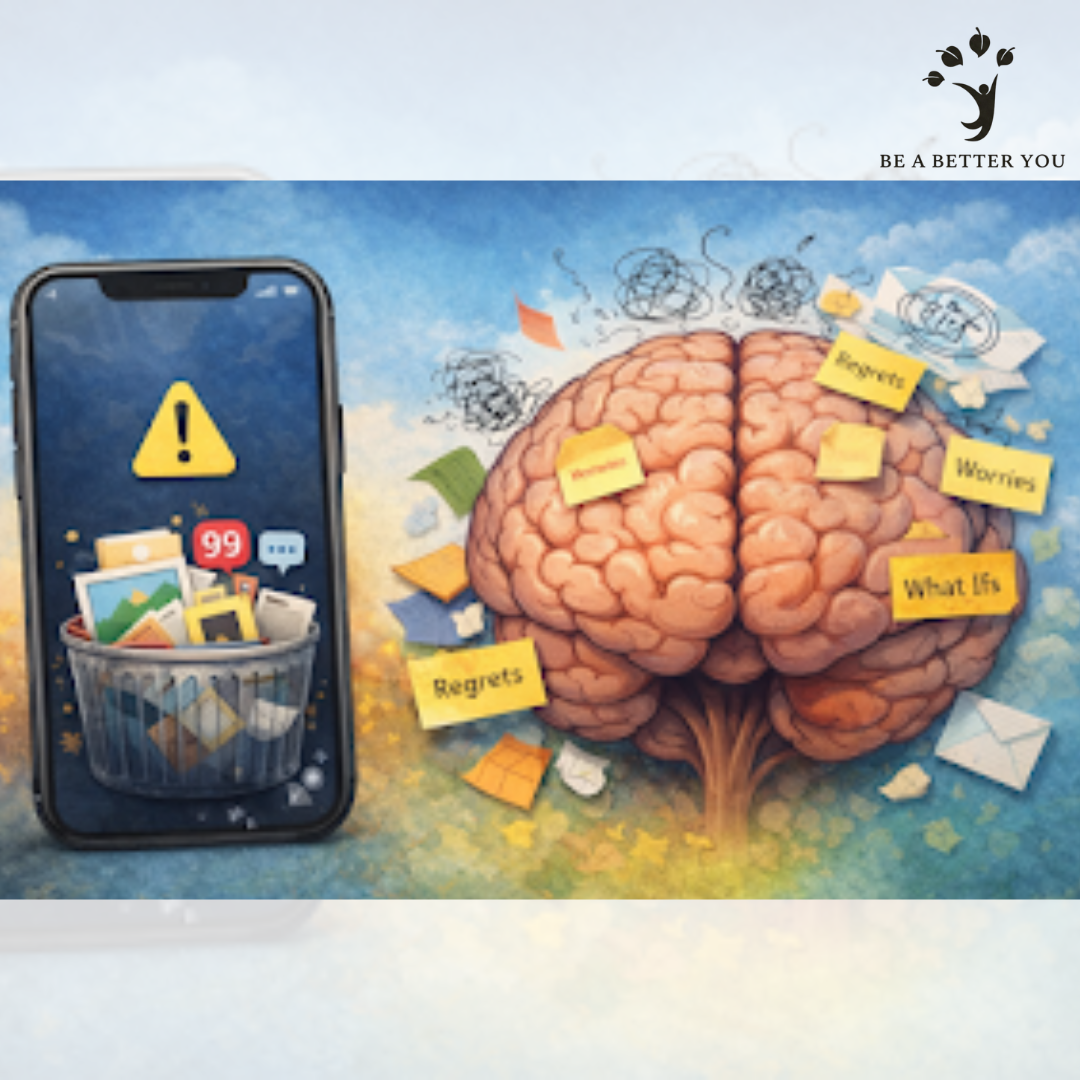
Nowadays, everyone has a phone, and many of us also use a computer. Every phone needs a Google email ID to perform certain tasks. Each device—whether it's a phone, computer, or email account—comes with a fixed amount of storage.
Have you ever seen this message on your phone or computer? "Storage Almost Full." Last night, my phone showed a familiar message: No new photos. No updates. Everything started slowing down.
When the memory of a device is full, it gives a clear signal:
Delete something to free up space so the device can function properly, and you don't lose important data. So what's our next step? We sigh. We delete old photos, unused apps, and random screenshots. And suddenly—our device feels lighter, faster, calmer and ready to work without any issues. This is how gadgets function.
But what if you've been carrying a device since birth? Now pause and think about these two questions:
1. What is the device you have from birth?
2. How do you remove unnecessary data from that device?
Let me help you with the answers.
The device you carry from birth is your brain. So now, calculate your age and figure out how much useful and how much useless data you've put into your brain. Have you ever tried to remove the unwanted data from your device?
Your Brain Is Not a Dustbin
I don't know about you, but I didn't make that foray for a long time until one day I realised that there are many words, lines, full pages, even whole conversations, unspoken words, and many other things that keep running through my mind.
Just like our phone or laptop stores data like photos we never look at, messages we should have deleted, apps we don't use anymore, in the same way your brain stores old memories, unfinished conversations, regrets, worries, other people's opinions, "what if" thoughts, Old hurts, unspoken anger, fearful thoughts, words spoken years ago but still echoing, etc.
We keep adding data… but rarely delete. Our brain does not give notification or complain loudly. It simply slows down quietly. And then we wonder what is happening and start asking ourselves questions like
- Why am I tired all the time, even after rest?
- Why can't I focus?
- Why do small things irritate me?
Maybe your mind is simply saying— "Memory is full."
What Happens When Memory Is Overloaded?
When a phone's storage is full:
- It becomes slow
- Apps crash
- The battery drains faster
But when the mind is overloaded:
- Thoughts loop endlessly
- Emotions feel heavy
- Decision-making becomes hard
- Peace feels distant
- Creativity stops
- Joy feels blocked
- Small things trigger big emotions
Same Problem. Different device. Both need space to function well.
What Is Unwanted Data in the Mind?
Unwanted mental data looks like:
- Holding on to past mistakes
- Replaying hurtful words
- Comparing yourself with others
- Carrying guilt that is no longer needed
- Fear that doesn't belong to the present
These thoughts once had a purpose. But now, they only take up space. We often fear, "If I let go, I will forget; if I delete this pain, my lesson will go.
But just like a phone:
- Deleting junk does not delete important files
- Clearing the cache does not erase identity
Letting go means:
- Releasing what no longer serves
- Keeping the learning, not the load
How Do We Clear the Mind's Storage?
As we long-press and delete apps on our phones or uninstall unwanted software on our computers, we can't do the same with our brains. But we do need the delete or reset button for our brains. We have certain techniques that help us create a space in our brain, which are:
- Writing/Journaling – move thoughts from head to paper
- Mindful breathing – clear background noise
- Let them, let me – release what's not in your control
- Gratitude – replace clutter with clarity
- Expressing emotions – like deleting old messages
By applying these techniques, your brain starts decluttering data stored for many years.
Empty Space Is Not Emptiness.
When you delete unwanted data from your phone:
- You create space
- Performance improves
- New updates install smoothly
When you release mental clutter:
- Creativity flows
- Emotions feel lighter
- Life responds better
Space is where growth begins.
A Gentle Reflection for You
Your phone tells you when the memory is full. Your mind doesn't.
If this blog resonated with you, take 5 minutes today and ask yourself:
- What am I holding that I no longer need?
- What thought has been living rent-free in my mind?
- What memory can I thank—and let go?
- What mental "app" no longer serves me?
- Write one thing you are ready to delete from your mental storage.
A clear phone works better. A clear mind lives better.
Maybe it's time to press delete—with kindness.
If this message reminded you to clear mental space and care for your inner storage, I invite you to connect with me—together, we'll gently release what no longer serves you and make room for clarity, calm, and meaningful growth.
Suppose you overthink a lot and want to stop it. Read my book Mind Dump Method: Stop Overthinking in 10 Minutes a Day, which gives you a simple journaling system you can use in just 10 minutes a day. Visit the Books page to learn more.